
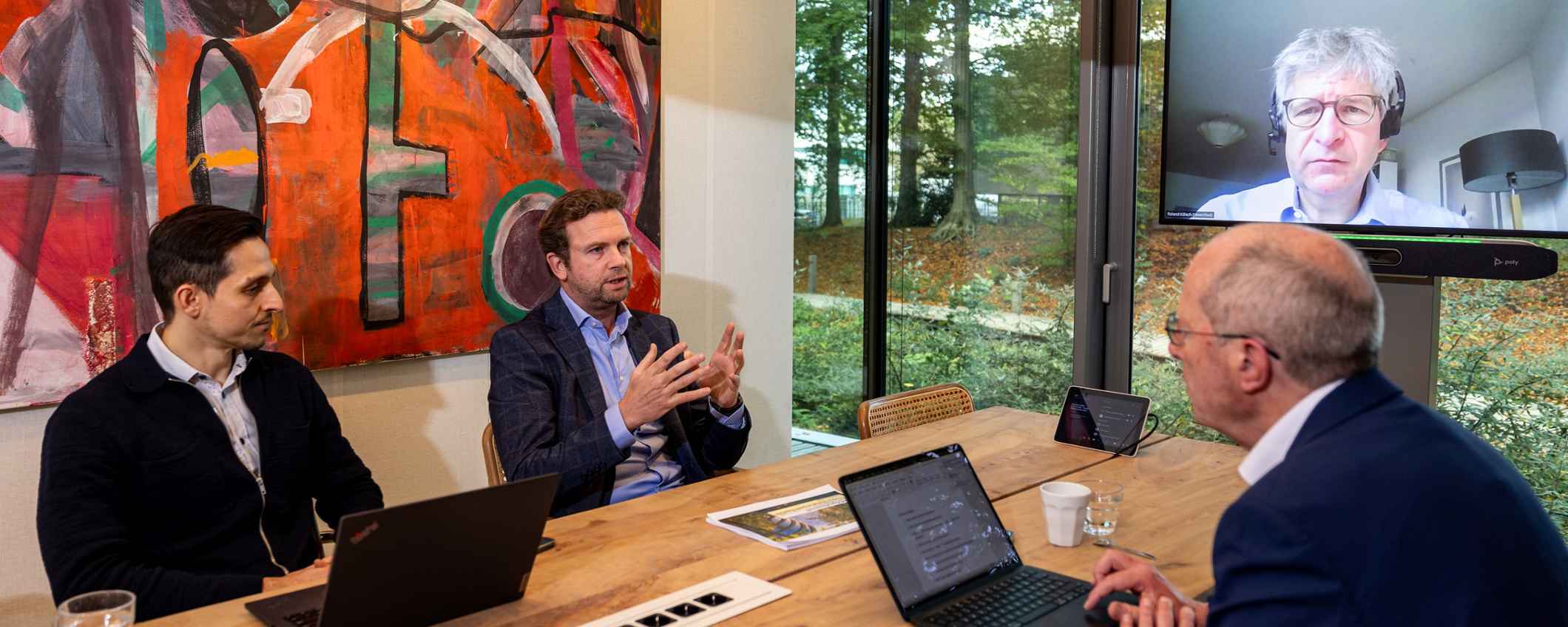
Hans Heuser: How do reports of ever-higher temperatures and rising CO2 emissions influence your work as impact investors, as you see yourselves?
Arjan Palthe: "That's a valid question, and one that is not easy to answer. Both in Europe and especially in the US, we are confronted with a political development that is increasingly shifting towards the right and right-wing populism. Unfortunately, protecting the environment is no longer as high a priority as it was in the past. Nevertheless, we are making progress, albeit not in a linear fashion. This makes our task even more important right now: there is a lot to do, and some developments are certainly not encouraging. The bottom line is that we must do even more to convince people – as Triodos, but also as an investor."
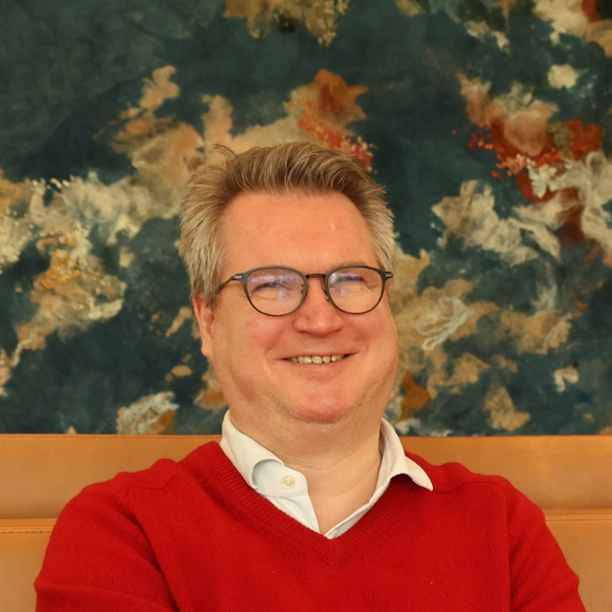
"Impact is not confined to private markets"
Roland Kölsch: Let's getstraight to the heart of your approach: what is the basic strategy, and what does your selection process look like?
Sebastian Rojas: "We focus on positive impact. All 50 companies we hold in the fund must have a clearly demonstrable positive impact on at least one of the transition themes we have defined, which are linked to the UN SDGs. The companies are selected using a bottom-up approach, for which we employ a team of ten analysts. The portfolio is concentrated, and we usually know the companies and their management personally, often for many years. This focus allows us to engage in genuine engagement activities, i.e. to exert direct influence on companies by talking to management, making suggestions and initiating real change."
Heuser: But how do you ensure that your engagement in terms of sustainability actually achieves the desired result?
Palthe:"An important keyword here is concentration. A portfolio size of 500 companies would hardly make sense – successful engagement is only viable and achievable when concentrated on 40 to 50 companies. We invest with a long-term horizon and see ourselves as a genuine partner for our portfolio companies. The fund size we have achieved over time gives us particular credibility: we get a 100% response rate on our enquiries to companies – large US corporations included – and can prove that our suggestions are actually being heard."
Kölsch: What does this evidence look like in concrete terms, given the ongoing criticism of so-called impact claims?
Palthe: "Our definition of impact is twofold: firstly, a company's investment story must be directly linked to our transition themes. Secondly, we not only measure impact qualitatively, but also document it quantitatively using concrete figures. We use external databases to quantify, for example, the proportion of a company's revenue that has a measurable social or environmental impact. For our portfolio, we aim for at least 50 per cent positive impact revenue; currently, we are at 69 per cent. That is far more than our benchmark index, which has a rate of just 22 per cent."
Rojas:"Examples of companies with a 100 per cent impact score in the fund include renewable energy companies, but also healthcare giants such as Novo Nordisk and Astra Zeneca, which are assigned to the wellbeing transition theme."
Heuser: Can you briefly outline the transition themes?
Palthe: "We’ve defined five themes in total, which we consider across the entire Triodos group, not just in our investment area; they also apply to the bank. The focus is on topics such as the use of resources and energy, as well as healthy nutrition, social behaviour characterised by solidarity and collaboration, and the transition from a winner takes all culture to wellbeing for all stakeholders. We are thus concentrating on all areas that are need of systemic change. In this way, we are addressing a total of 16 of the 17 SDG goals and are always involving new companies in the process."
Heuser: How is the fund's management structured?
Rojas:"Each company in the portfolio is viewed from two perspectives – by a financial analyst and a sustainability analyst. This ensures that we adhere to the dual control principle. The team works closely together: decisions are discussed jointly, but the portfolio manager bears final responsibility for buying or selling. However, the analysts are fully involved and are the owners of their respective investment ideas."
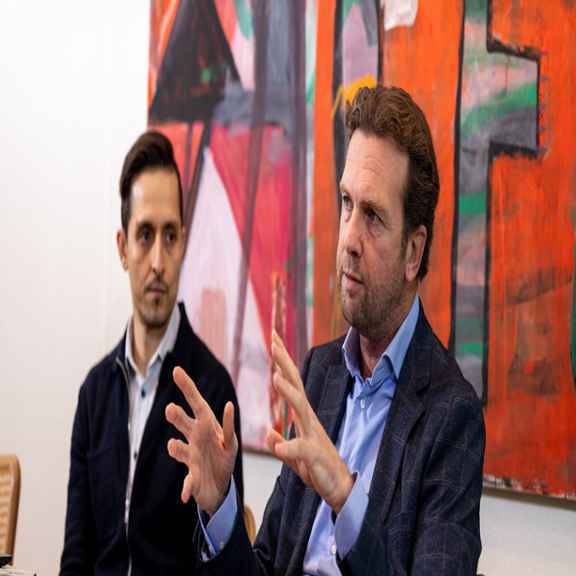
Kölsch: And how do you deal with exclusion criteria?
Palthe: "Our exclusion list is significantly stricter than that of many of our competitors: zero tolerance for fossil fuels, tobacco, nuclear power and weapons, for example – in some cases, there is a maximum limit of five per cent of sales, but in case of doubt, a company is excluded anyway. Animal testing is only accepted if medically necessary."
Kölsch: Doesn't this strictness lead to problems when it comes to diversification?
Rojas:"Experience shows that despite many exclusions, we find enough exciting companies to build a balanced portfolio. Of the initial 7,000 or so potential candidates by market size and region, around 1,000 remain after impact and negative screening criteria have been applied. From those names we select our portfolio of 50 stocks through intensive analysis. It's a labour-intensive, but effective way of working."
Heuser: Are there any examples of companies that you have removed from the fund?
Palthe: "One example is Nike. Despite progress in supply chain management, the fast fashion aspect of their business is too dominant. We also excluded Bridgestone because its business model is ultimately based on customers driving as many kilometers as possible. At Japan Railways, fundamental weaknesses led to removal, despite positive impact principles."
Heuser: What about companies in the fossil fuel sector, such as Total Energies?
Rojas:"Such companies are strictly excluded as long as they are active in the fossil fuel sector. If that were to change radically at some point, it might become worth discussing."
Kölsch: The EU is discussing new product categories such as "transition" and "sustainable"funds. Where do you classify your fund?
Palthe:"Our approach clearly corresponds with the “sustainable” category: thematically with a clear reference to transition issues and SDGs. We do not invest in so-called "transitioners", i.e. companies that are transforming themselves, but in active pioneers who contribute to sustainable development with their products and services. We want to support the pacemakers."
Kölsch: A key aspect of achieving impact is engagement – how do you approach this?
Palthe:"Engagement begins with the initial review of a potential investment. We ask questions before we invest and engage in intensive dialogue. This takes place on three levels: firstly, in individual exchanges with each company at least once a year, whereby our expertise and sustainable best practice proposals are very well received. Secondly, we discuss specific projects – such as those relating to climate, remuneration or plastic packaging – where we want to see improvements over a three-year period. If there is no response here, this may lead to the sale of a share. Thirdly, engagement through cooperation projects with other asset managers."
Rojas:"In the area of executive board remuneration, we work with two thresholds: the ratio of CEO salary to median employee income must not exceed 100:1. Absolute remuneration is also reviewed – depending on the size of the company and the number of employees – and, if exceeded, transferred to the engagement process."
Heuser: What key figures do you use to manage your climate engagement?
Palthe: "In order to make progress measurable, we are particularly engaging with the five largest emitters in the fund. The validation of emission targets according to the Science Based Targets initiative (SBTi) plays a central role here. Currently, 71 per cent of our investments have SBTi-validated reduction targets, which is a very high figure."
Kölsch: Is a large fund portfolio an advantage when it comes to engagement, for example for discussions directly with the CEO?
Rojas:"It is not just the volume factor that is decisive, but the quality of our preparation. We are in a position to ask managers the right questions. This enables us to achieve a very high level of willingness to engage in dialogue with companies of all sizes and to exert influence."
Kölsch:Finally, regarding your vision for impact investing: is this the end of the trend or more of a continuation of the momentum?
Palthe:"I believe that the trend will continue in the long term, even if there are political setbacks and sustainable investments are less of a focus in the short term. Institutional investors remain committed to sustainability and will continue to increase their investment in this area in the future. Impact investing as a sustainable strategy will remain largely unchanged. The desire to achieve a comprehensive impact will remain."
Hans Heuser:Thank you very much for talking to us!