
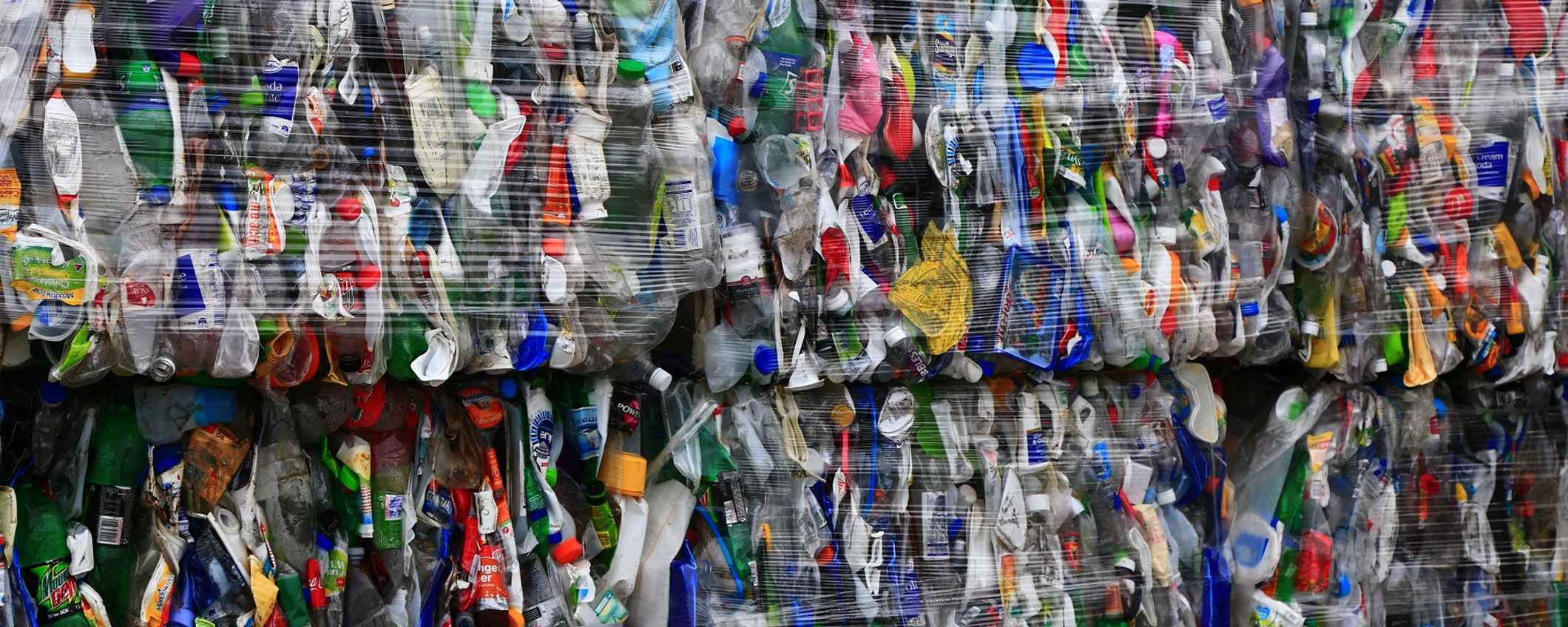
Since 2023, we have been engaging with three key players in the consumer staples sector: Danone, Henkel and Procter & Gamble. All three are part of our Impact Equities and Bond portfolios and have significant exposure to plastic pollution. Through ongoing dialogue we aim to evaluate how they are progressing in reducing plastic use, increasing circularity and improving the transparency and comparability of their disclosures.
Recalibration of ambitions
The limitations of voluntary corporate commitments have become increasingly evident. While many companies set ambitious packaging targets several years ago, the past year has seen a notable recalibration of ambitions, with some companies revising targets downward in response to operational, cost and infrastructure constraints. A prominent example is PepsiCo, which reduced both its virgin plastic reduction and recycled content targets. The company revised its plastics ambitions by dropping its target to cut virgin plastic use by 20% by 2030 in favour of an average 2% annual reduction through 2030, while also lowering its recycled content goal from 50% by 2030 to 40% by 2035. Note that Pepsico is neither part of our investment portfolio, not of our universe. Importantly, none of the companies included in our engagement programme have taken similar steps to weaken their commitments.
Investor influence has also shown signs of strain. Although plastics- and waste-related shareholder proposals gained traction in earlier proxy seasons, support levels have softened in recent years. In 2025, a shareholder resolution at Procter & Gamble on plastics disclosure received meaningful minority support (around 14%), including from Triodos Investment Management. But even though investors are concerned about these issues, it’s not easy to turn that concern into enough votes for concrete steps/change at shareholder meetings.
Following our initial engagements in 2023, we defined a set of objectives that continue to guide our assessment of company performance (see also our 2024 key findings). These objectives are increasingly aligned with PPWR requirements, particularly with respect to recyclability, recycled content and packaging design. Across our engagements, progress has been most visible where these objectives are supported by clear metrics, governance structures and accountability mechanisms.
Of our portfolio companies, Danone, Henkel and Procter & Gamble have the most significant exposure to plastic pollution risks. Our engagement with these companies therefore focuses on whether commitments are translating into measurable outcomes. We also discuss whether their current strategies remain credible in the face of tightening regulation, rising costs and growing scrutiny.
The following case studies illustrate the outcomes of our engagement and the progress each company has made toward more sustainable packaging practices.
Danone
Our engagement with Danone has been the most frequent and constructive within this project, reflecting the company’s openness to dialogue with us and the fact that plastics and packaging are identified as a material topic under its Corporate Sustainability Reporting Directive (CSRD) disclosure. In particular, Danone has meaningfully expanded its plastics and packaging reporting following its February 2025 agreement with ClientEarth and other NGOs, strengthening transparency and governance around plastic impacts. Our discussions focus on how these commitments translate into concrete updates to the vigilance plan, as well as on the financial and operational implications of evolving EPR frameworks, potential plastic taxes and alignment with PPWR definitions.
In this context, Danone continued to show progress across key plastics and packaging metrics in 2024, though further improvements will be required to meet near-term targets. From a higher-level perspective plastic use declined by 11% versus the 2018 baseline and 2% versus 2020, while virgin fossil-based plastic fell by 8% compared with 2020. The share of reusable, recyclable or compostable packaging reached 85%, with 76% of plastic packaging meeting these criteria. Plastic recovery improved to 60%, and average recycled content increased to 16.8%, up from 14.6% in 2023. Supplier engagement now covers 43% of the packaging CO₂ footprint, strengthening data quality and emissions management.
Henkel
Our engagement with Henkel has also been constructive, reflecting the company’s formal identification of plastics, packaging and circular economy as material topics under its CSRD disclosure. Our dialogue focused in particular on transparency around absolute plastic use, progress toward the company’s 2025 fossil-based virgin plastic reduction target and the alignment of recyclability claims with PPWR definitions and performance thresholds. We also discussed how Henkel is monitoring evolving regulatory requirements and definitions, and how these are integrated into internal systems and reporting.
During this period, Henkel made progress across circularity metrics, including a 6.4% year-on-year reduction in absolute plastic packaging, a 25% increase of recycled plastic content, an 89% increase of recyclable or reusable packaging and a 39% reduction in production waste intensity. These figures indicate progress toward 2025 targets, particularly on recycled content.
Procter & Gamble
Our engagement with Procter & Gamble has been more limited in depth compared with its European peers. While the company indicated that it is open to investor questions, follow-up discussions on plastics and packaging have remained high level, particularly in response to investor concerns raised in the 2025 shareholder resolution. Our engagement focused on the scalability and consistency of Procter & Gamble’s plastics strategy across its global operations. We also discussed the absence of interim milestones toward its 2030 targets. In addition, we expressed our concern about the discontinuation of the ESG modifier in executive incentives, which we view as a missed opportunity to strengthen long-term accountability.
Against this context, Procter & Gamble has strengthened disclosure and accelerated progress on virgin plastic reduction (21% versus the 2017 baseline), while recycled content reached 17% and 80% of packaging is designed to be recyclable or reusable. However, recycled content remains lower compared to peers and clearer interim milestones and portfolio-wide implementation would strengthen confidence in delivery on the 2030 goals. The ~14% investor support for a plastics-related shareholder resolution reinforces the case for enhanced disclosure and deeper engagement.
Conclusion
Our engagement with Danone, Henkel and Procter & Gamble highlights meaningful progress across all three companies, but also clear differences in ambition, execution and transparency.
- Danone currently shows the strongest alignment between ambition, disclosure and delivery, particularly on absolute plastic reduction, recovery and reuse.
- Henkel demonstrates credible percentage-based progress and robust internal systems.
- Procter & Gamble has accelerated progress and invested heavily in innovation, but recycled content levels and consistency of implementation remain behind European peers.
For all three companies, systemic challenges, especially recycling infrastructure gaps and material availability, remain significant. Inconsistent disclosure and definitions further limit comparability.
All three appear broadly on track to meet PPWR 2030 requirements, but the 2040 targets are substantially more demanding. Achieving them will require accelerated execution, stronger system collaboration and more outcome-focused reporting.
Our future engagement will therefore focus on areas where clarity remains limited, including the financial and operational implications of evolving EPR frameworks, the exposure to potential plastic taxes, the credibility of interim milestones toward longer-term targets and the consistency of implementation across global operations.