
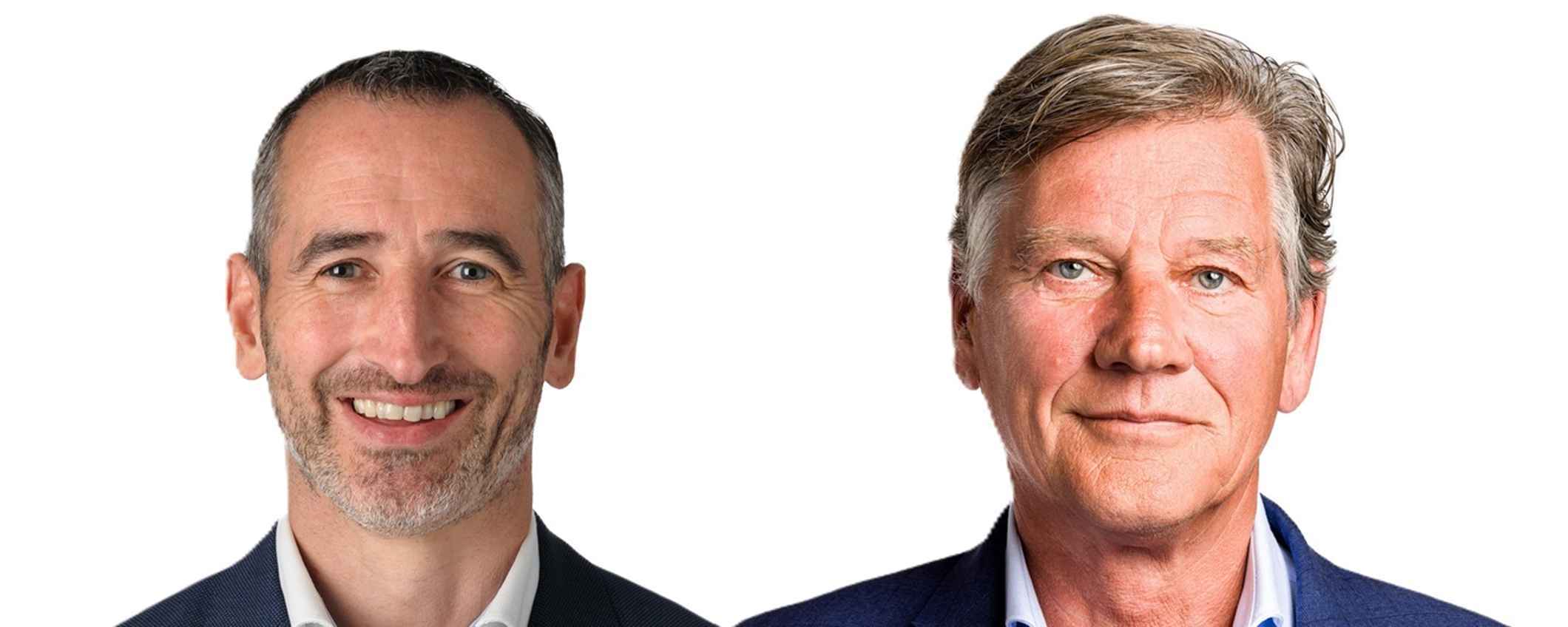
Last year, Triodos IM and STOXX developed an impact benchmark for institutional investors. Why a new index, and what makes it relevant?
Ronald Waals:“In recent years, we have seen a clear trend towards more impact investing, particularly in private investments, but also in the public sector. However, there is a lack of representative benchmarks in this area. That is why, together with STOXX, we decided to develop one for public equities: an all-cap index comprising companies that generate more than 25% of their turnover from activities that positively contribute to at least one of our five transition themes. We can also use this index to calculate how companies contribute to the UN Sustainable Development Goals (SDGs). By additionally applying a negative screening process, we prevent controversial companies from entering the index or a portfolio through the back door. This ensures a positive contribution from a substantial portion of the companies’ turnover, without any negative contributions from the remainder. Using our methodology, approximately 900 of the 8,000 companies in the Developed Markets Index remain.
At the end of February, we launched a sub-index for small and mid-caps, also in collaboration with STOXX. Impact investors can use our indices, but we also use them to measure our own performance against the benchmark. We classify our funds as SFDR Article 9 and must be able to demonstrate this transparently.”
Dimitri Willems:“Our five transition themes are food, resources, energy, societal and wellbeing. They can all be linked to several SDGs. In our actively managed portfolios, the positive impact averages between 75% and 85%. Just over 81% of the portfolio companies’ turnover has a positive impact. The portfolio contributes primarily to SDGs 3, 8, 11, 12 and 13. By way of comparison: only around 20% of the turnover of companies in a standard mid and small-cap index has a positive impact. Compared to our new impact index, the deviation will be smaller, but the strategy still stands out in a positive way. Interestingly, our index generates quite some discussion about why certain companies are or are not included. Discussions of this kind often yield interesting new insights, both for us as portfolio managers as well as for our investors.”
Didn’t small and mid-caps show a somewhat lackluster performance on the stock markets over the last decade?
Willems:“They did. Over the past five years, investors mainly invested in those companies that are now at the centre of the AI hype. These stocks have risen sharply and now it’s even a risk for institutional investors not to have these large-caps in their portfolios. And yet, small and mid-caps have outperformed large-cap stocks over the past 15 to 20 years. In our view, the small-cap effect has not disappeared, despite their weak performance in recent years. In fact, there has been a turnaround over the last six months. Historically, small-caps also perform better in an environment of falling interest rates. We are currently in such a cycle of looser monetary policy, which plays into the hands of small-caps. Another argument is that, for the past year or two, there has been a discount on the valuation of small-caps relative to that of large-caps. Usually, small-caps trade at a premium, partly due to their potentially higher growth. In the long term, the potential earnings growth of small-caps is higher than that of large-caps. The combination of a favourable interest rate environment and the premium makes small-caps attractive right now.”

iSTOXX Triodos Developed Markets Mid and Small Cap Impact Index
Waals:“Small-caps are also attractive for another reason, which is increasingly being recognized, particularly by sustainable investors. To put it simply, they are better suited to an impact strategy. Within our all-cap impact index, 800 out of the 900 companies are small-caps. We also hope that institutional investors, who generally prefer to closely track an index, will appreciate that there is now an impact benchmark against which our strategies have a smaller tracking error. That makes our investment approach potentially more attractive.”
Why are small and mid-caps better suited to impact investing?
Willems:“As mentioned, this is already evident from the universe of our index, which consists mainly of small-caps. Large-caps often have multiple activities, not all of which meet our impact criteria. Don’t forget the fact that 80% of all companies on the stock exchanges are mid or small-caps. The fact that large-caps are so dominant in indices is mainly due to their market capitalisation. The enormous variety of smaller shares also allows us to diversify easily across sectors and regions. Furthermore, by ‘impact’, we also mean being able to influence the business operations of our investments. With our engagement approach, we are more likely to be sitting down with the CFOs and CEOs of smaller companies than with those of larger ones. In fact, with the 41 companies currently in our portfolio, we always speak to the top executives, often several times a year. The great thing is that we really see progress from them on the sustainability issues we raise.”
How does this strategy differ from other small and mid-cap funds?
Willems:“We adopt a fundamental bottom-up approach which, partly due to our strict criteria, results in a concentrated portfolio. We do not have a distinct style, such as growth or value. I like to say that we are ‘balanced’ or style neutral. We also apply a rigorous ESG framework. Various ESG factors are even incorporated into our valuation models. Another distinguishing feature is that we invest only in profitable companies; 34 of the 41 holdings also pay dividends. In terms of diversification, we currently invest 58% in the US, 30% in Europe and 8% in Japan, spread across nine sectors.”
How do you view the future of impact investing in small and mid-caps?
Waals:“Due to geopolitical developments, the emphasis on sustainability and impact seems to be waning somewhat. Among institutional investors, however, it remains high on the agenda. For instance, many Dutch pension funds have set themselves the target of generating a positive impact with at least 10% of their assets. This can be achieved through private markets, but this only captures a fraction of the investment opportunities. In addition, there are now more opportunities to achieve impact through listed investments. I believe that the fact that Europe is leading the way in sustainability will benefit us in the long term. The biggest constraint at present is not the capital available for impact, but the investment opportunities. This is particularly true for private investments. In the listed sector, including in our funds, there is still sufficient scalability and the investments are also directly accessible.”
This article was previously published in Dutch by Financial Investigator.