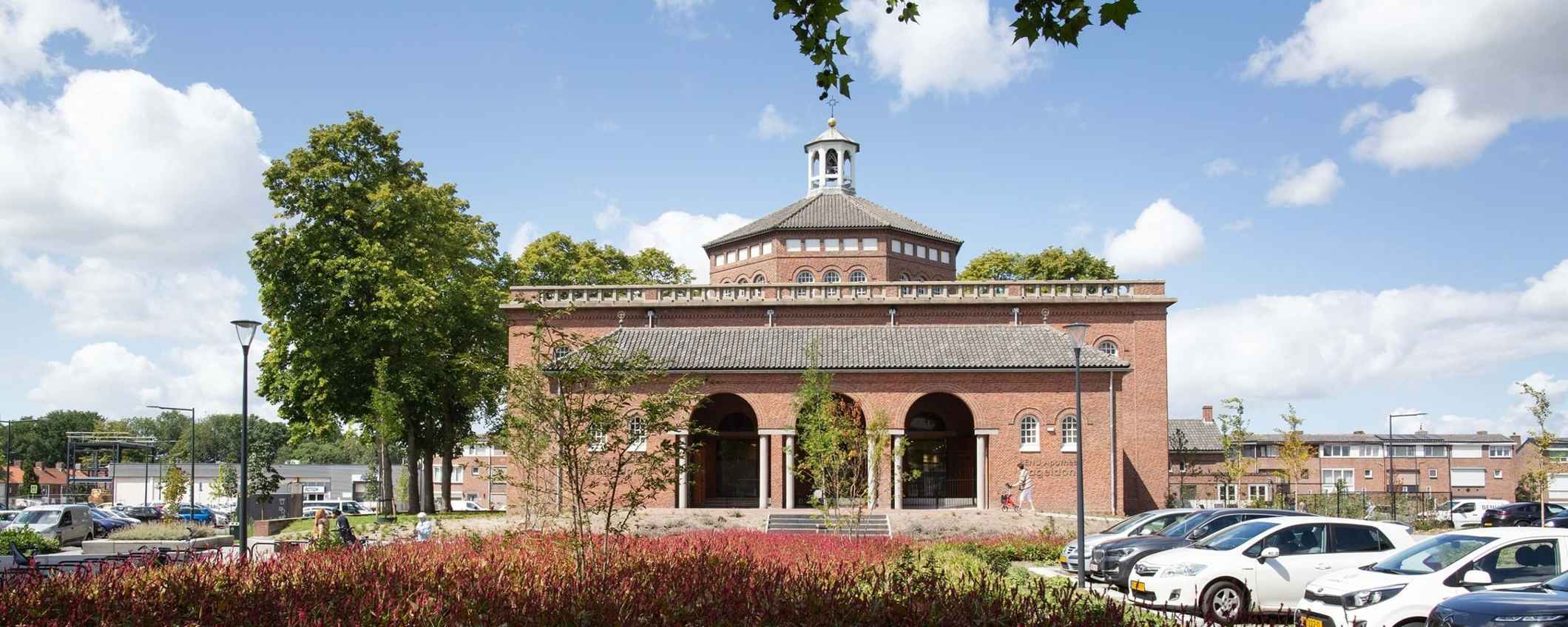
General practitioner (GP) Liesbeth Bultman used to pass the former Heilig Hartkerk in Bergen op Zoom regularly as she cycled to her practice in the Gageldonk area each morning. “It was an abandoned mass of brick, standing derelict in the middle of the square by the shopping centre.” Now, she parks her bicycle here every morning. Last April, together with other care providers, the GP from Vijverberg Medical Practice moved into the church, which has since been renamed Gageldonk Health Centre.
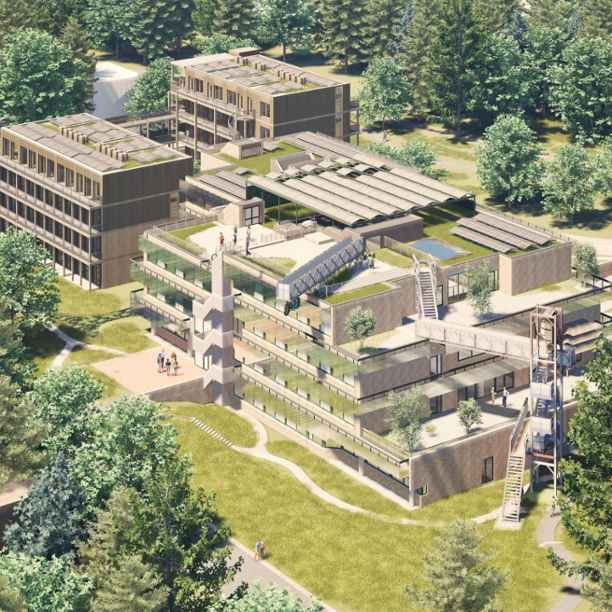
From army green to green economy
After the Roman Catholic church became vacant in 2014, it was used for many years as episcopal storage. Vestments of clergy and furniture not in use by other churches were stored here. Bultman was asked several times whether she saw potential for a health centre in the building. “But we had just got a new premises, and we were comfortable there.”
Until the medical practice grew and the location began to feel cramped. A plan was formed: a health centre in a location right at the heart of the neighbourhood. Just as the church once played a central role, the health centre could do the same. In addition to the GPs, the building also houses a pharmacy, podiatrist, physiotherapist, dietician, district nurse, occupational therapist, and speech therapist. The aim? To provide care together, so that patients are helped more quickly and efficiently.
A health centre with ecclesiastical features
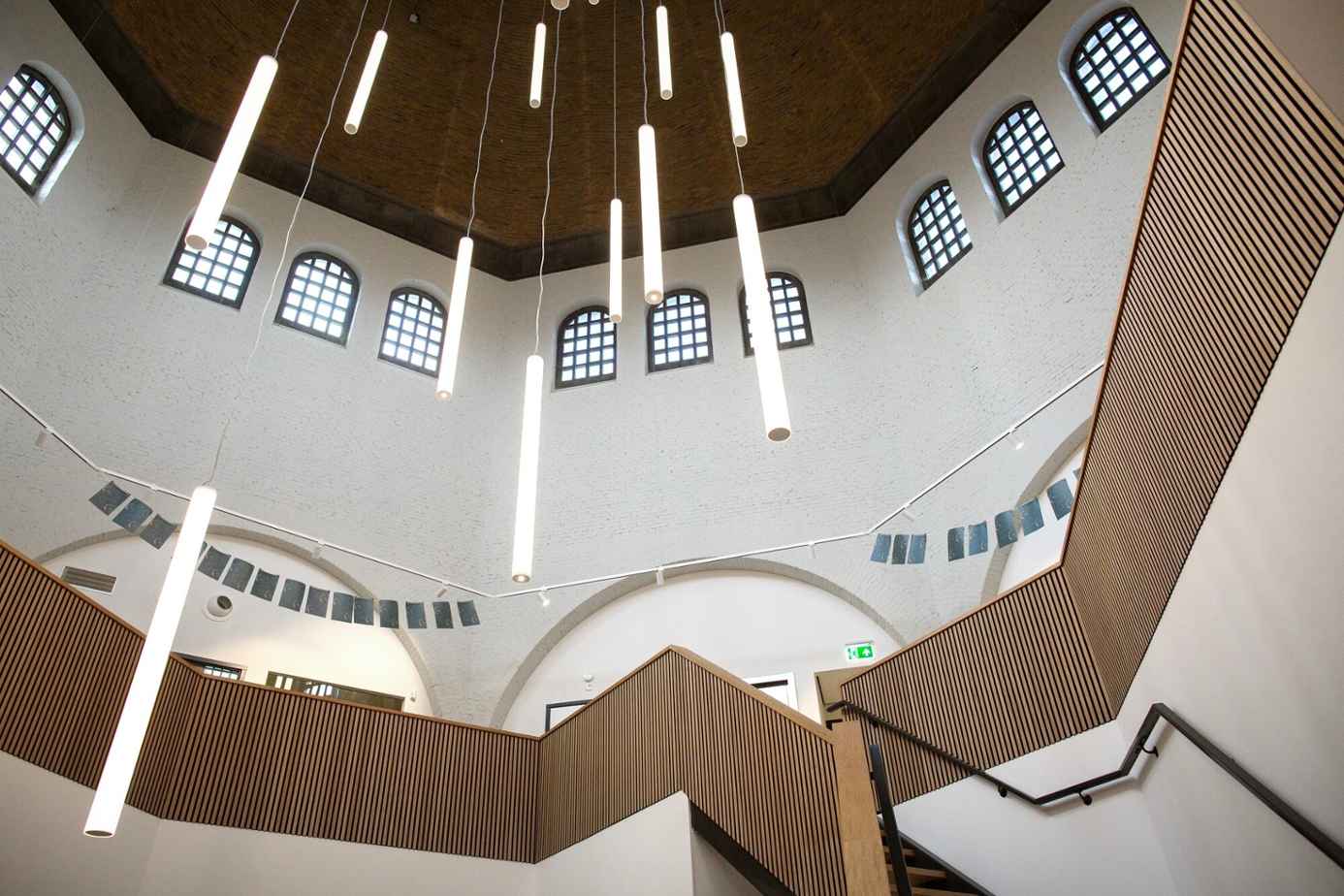
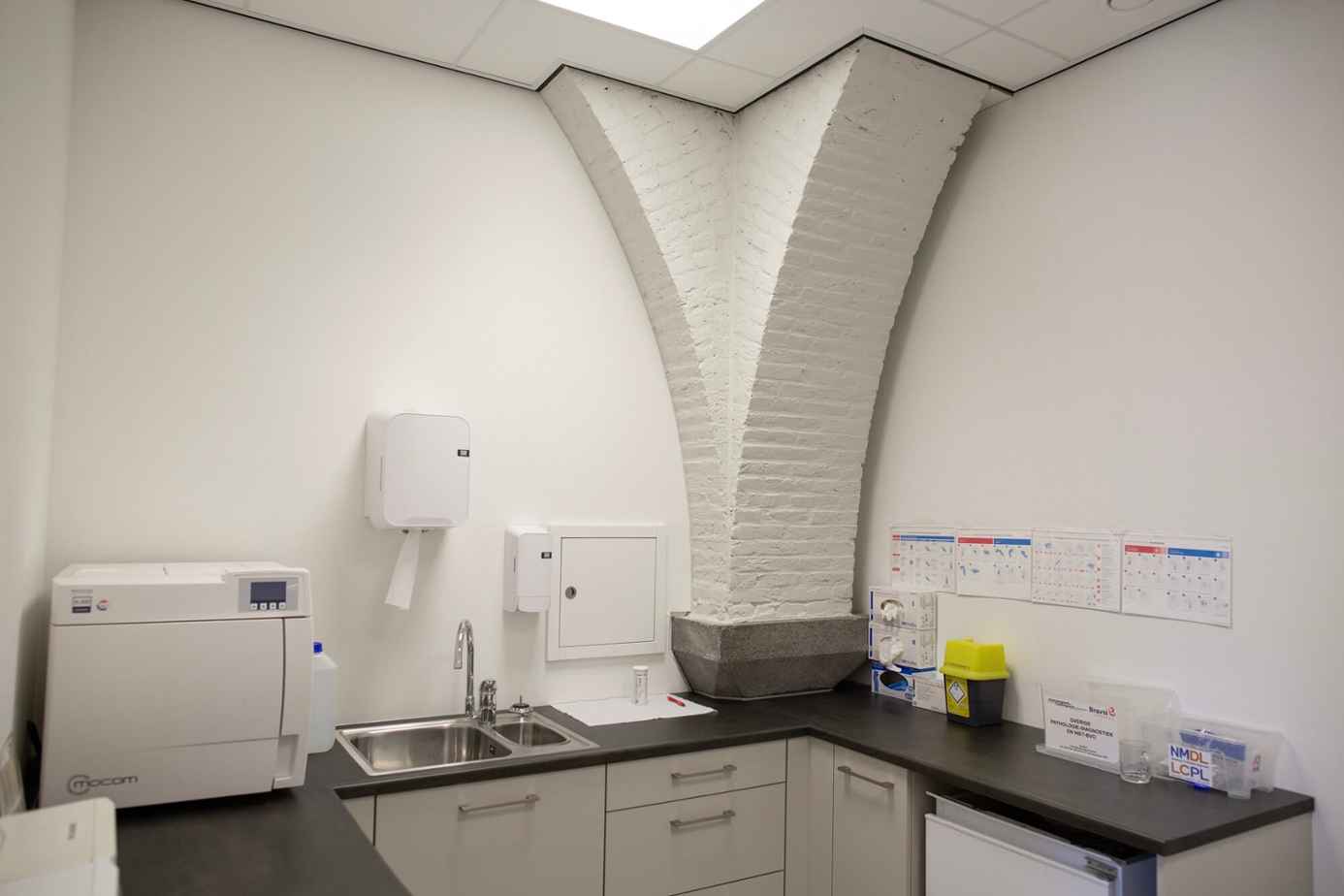
Converting the church was not without its challenges. “This moving plan originated seven years ago; it wasn’t simply a matter of putting out some chairs and being done with it.” Those who enter now will still recognise the ecclesiastical features. The large wooden doors, which used to open for Sunday services, now welcome people warmly. Glass sliding doors directly behind them keep the building warm. The statue of Christ the King by Paul Grégoire, once found at the back of the church, now greets people at the entrance. A little further in, if you look up, you can see the vaults and the enormous octagonal dome with arched windows. The pillars and high arches also recall its church days.
A newly built floor is a recent addition. In the central hall, a spiral staircase leads up to where the GPs are located. Where the altar once stood, you can now take the lift up to the first floor. The eight stone capitals, previously only visible high above, are now at hip height as you walk around the upper level. Voices echo through the building at the reception desk, shared by the GPs. When you sit down with the doctor, you share your story beneath one of the preserved vaults in the consulting room.
Alongside the three GP practices, other care providers are also based in the centre. If you need a blood test to be sent to the hospital, you can do so downstairs at the dedicated blood testing station. “This means people don’t have to go all the way to the hospital and can receive care in the neighbourhood.”
Collaboration
This neighbourhood is Gageldonk in Bergen op Zoom, a 1960s area which was part of the city’s post-war expansion. Spacious and relatively green, it was attractive to young families. The demographics slowly changed: more migrant families arrived, and by the turn of the century, 80 per cent was social housing. 85 per cent of the neighbourhood’s residents have a lower socio-economic status, with associated health issues.
Having all the care gathered in one building is not just for practical reasons. “The strength of a health centre is that you don’t all look at a patient separately, but collaborate.” That cooperation goes beyond the walls of the church. “It’s important for care providers to know the people, to know which school the children attend. Through conversations with our patients, we discover the needs within the neighbourhood.”
This strong connection to the social domain is also reflected in cooperation with the ‘Huis van de Wijk’, the local social centre on the same square, where various organisations offer social care. “Someone who comes in with headaches and turns out to have financial problems can be quickly referred to tackle the real issue. There’s also a wellbeing coach from the ‘Huis van de Wijk’ available to accompany people to a billiards or card club, for example, if they’re feeling lonely.”
Creative sustainability
To ensure the heart of the neighbourhood was not just social but also sustainable, the church was thoroughly renovated. Various care providers are financially involved, but the project gained momentum when developer and entrepreneur Jeroen De Wildt, of BuiltbyDeWildt, came on board. He bought the building in 2021, together with partners. His company creates affordable accommodation for care providers. With this project, the company has restored the former church’s social role in the neighbourhood.
Health centre Gageldonk
The 1950s building was an uninsulated municipal monument. Nevertheless, De Wildt and his team managed to raise its energy rating from G to A+++. The entire floor – over 2,000 square metres – had to be removed to install new sewerage and foundations for the upper storey. This was both a curse and a blessing: expensive and time-consuming, but it also allowed for a heavy subfloor with PIR insulation panels – high insulation value sheets used for the façades and roof as well. Only the dome at the very top could not be insulated.
An internal shell was created in the church – a building within a building – using Faay partitions. These walls are good for air quality and acoustics. The outer appearance of the church wasn’t altered (apart from a thorough cleaning), but inside, much was possible in terms of sustainability.
This did require creativity, acknowledges De Wildt. “We wanted to use a three-pipe heat pump system, which allows for cooling, heating, or simultaneous cooling and heating. But we couldn’t place the heat pump on the church’s roof.” The church’s old garage offered a solution: four new heat pumps were installed there, and the necessary air handling unit now sits in the cellar, rather than on the roof. This keeps the equipment out of sight. “Our biggest concern was whether there would be enough space, but in terms of cost, it didn’t make much difference.”
There was also creative thinking about the roof to accommodate 180 solar panels. “It’s a listed building, of course, but thanks to the balustrade on the roof, you can’t see the panels.” The building is ideal for solar panels, as most electricity is used between 7.30am and 6.30pm.
Added value
The total cost of the project was around EUR 5.3 million. A loan from Triodos Bank and Triodos Groenfonds provided the solution. Bultman laughs as he admits that it would have been cheaper to build something new. “But it’s important to preserve the church. It adds colour to the neighbourhood and is part of its history. That gives it added value that cannot be expressed in monetary terms.” Willy Bulsink, fund manager at Triodos Groenfonds, adds: "The Gageldonk Health Centre is a fine example of how Triodos Groenfonds is committed to making the living environment more sustainable. A vacant monumental church has not only been made more sustainable, but has also been given a new purpose as a health centre in the neighbourhood. This way, we kill two birds with one stone."