
Wind and solar generated 30% of Europe’s electricity in 2025, overtaking fossil fuels for the first time. A huge positive, but the downside is that the volumes from wind and solar power have become so large at peak times that the grid cannot cope.
Grid congestion is becoming increasingly problematic, not just in the Netherlands. Wind farms and solar parks have to be shut down at peak times, and businesses and residential areas are waiting too long for a connection. According to De Ruiter, the key to a solution lies in energy storage via batteries, both before and after the meter: "Batteries can absorb peaks in production and ensure that sustainable electricity is available at times when the sun is not shining and the wind is not blowing."
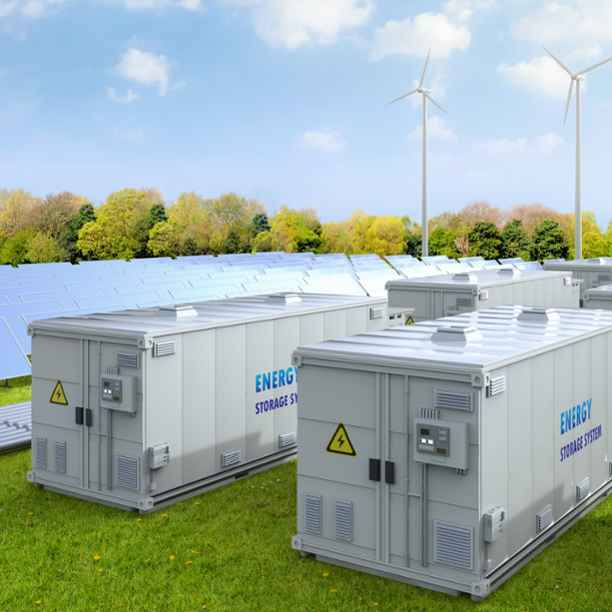
Expanding battery energy storage in Italy in partnership with Bluefield
A huge financing need
There are plenty of technological possibilities. Ever-improving batteries are being developed and batteries can be stacked in large battery projects. "This does require enormous investments, in which institutional investors, such as pension funds, can play an important role," says De Ruiter. Such projects offer good return potential and contribute to solving an acute economic challenge and to the success of the energy transition: a sustainable and autonomous European power supply. "This fits in well with institutional investors who want to link returns to making our energy supply more sustainable."
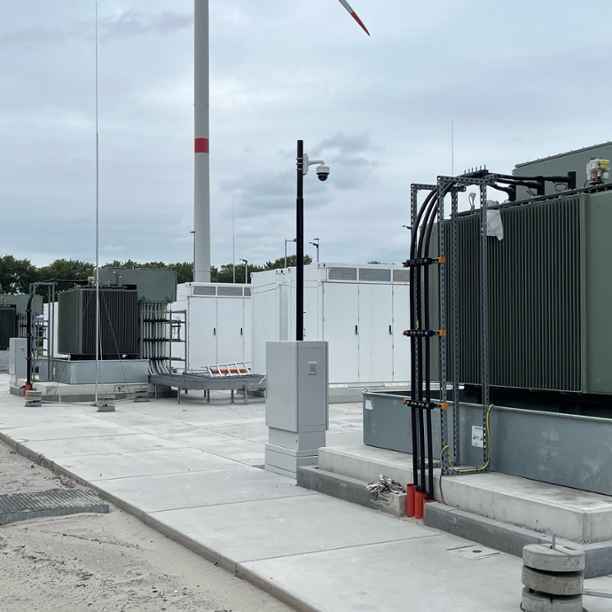
GIGA Giraffe: a beast of a battery
No new wind farms without batteries
Dutch national grid operator TenneT has calculated that approximately 9 gigawatts of battery capacity will be needed in 2030 in the Netherlands alone, while only 0.35 gigawatts is currently operational. "That 9 gigawatt target is not just a ballpark number," says Van der Kooi. "If we want the energy transition to succeed and to achieve the goals we have set ourselves, we need to install much more battery capacity. Otherwise, it won't work. We will no longer be able to build offshore wind farms, produce green hydrogen, drive electric cars and heat our homes."
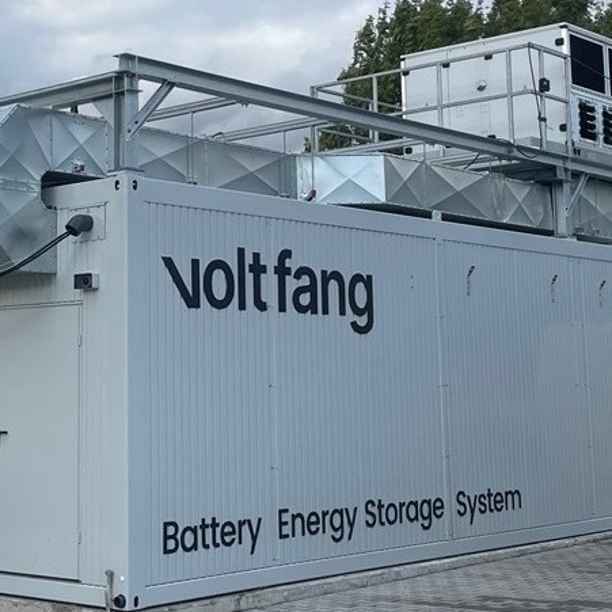
Entering the German Battery Energy Storage Systems market
Van der Kooi believes that we are at a decisive moment. "The Netherlands is lagging behind the countries around us," he says. "We were quite late in adding batteries to energy parks. However, the markets for these batteries are becoming increasingly mature."
According to Van der Kooi, there are now two important business models. "The market for stabilising the energy system is very topical at the moment: ensuring that we have a heavier and more stable network. The use of batteries 'behind the meter', for example in business parks and new construction projects, also means that companies do not have to slow down their transition from fossil fuels to electricity and that homes can still be built and occupied. However, the market that will generate more and more value is the arbitrage market: buying electricity when it is cheap and selling it later when prices are higher."
This prevents wind or solar energy from being lost. "After all, it's a shame if you have to shut down renewable energy generation. That also makes the construction of new wind and solar parks less profitable. Batteries offer the solution here," says Van der Kooi.
Stable cash flows, proven technology
De Ruiter points out that Triodos Energy Transition Europe Fund finances battery projects that generate a fixed income stream. The fund allocates an increasing proportion of its portfolio to this. "It's very different from investing in shares of battery manufacturers, for example, where much of the focus is on research and development. We finance proven technology, not pilot projects," says De Ruiter. "These are projects where the large capital requirement only arises once the permits have been obtained. The risk is then lower and you can expect relatively stable cash flows."
Van der Kooi adds: "What's more, the earnings from the batteries are not determined by subsidies. Roughly speaking, there are three types, from least to most volatile: one, the battery is leased to a creditworthy party, two, a tolling agreementwhereby the battery is used by an energy company and the revenues are shared, or three, the battery is used directly on the available markets, whereby specialised battery traders, known as optimisers, trade the battery, generating the highest revenues.”
Sustainability within the technology itself is also a focus. "Cobalt in batteries is a no-go for us," says De Ruiter. Van der Kooi: "The trend is for batteries to contain fewer and fewer potential conflict minerals. Because space utilisation is not an issue for these batteries, you can opt for a more responsible type. In addition, there is a growing market for batteries made from refurbished, reused car batteries."
From pioneering to scaling up
Four years ago, the fund was one of the first financiers of large-scale batteries in the Netherlands and has since supported follow-up projects. "We were a pioneer, but now you see more parties getting involved. By showing that it works, the market is growing," says De Ruiter. The fund is shifting its focus to storage and heat. "We want less wind and solar production in the portfolio and more batteries, but also sustainable heat," says De Ruiter. "Sun and wind remain important, but there is already sufficient other capital available for that. By financing these projects, you really achieve additionality."
Triodos' expertise is gaining recognition. "Clean Energy Pipeline has once again named us as the party that does the most deals in renewable energy in Europe," says De Ruiter. "We are keen to work with institutional investors, including pension funds, in this area. With batteries, we can really make the energy transition a success.”
This article was previously published in Dutch by PensioenPro.