
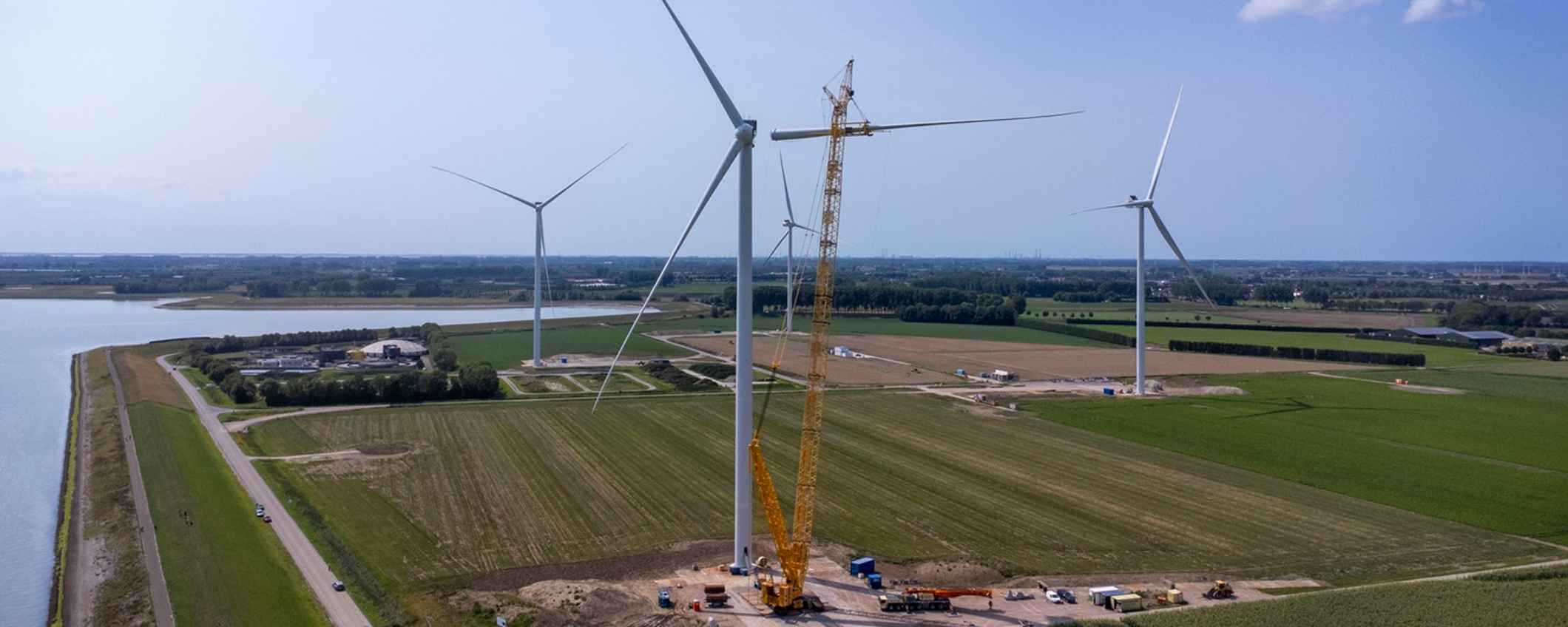
For Triodos Investment Management, sustainability extends beyond dismantling a wind turbine, says investment officer Jeremy Ruis. “When we invest in wind energy, we look beyond the energy a turbine generates during its lifecycle. We also consider what happens afterwards. The energy transition can only be truly sustainable if materials are given a new purpose at the end of their lifecycle.”
Triodos Energy Transition Europe Fund has co-owned the Willem-Annapolder wind farm, developed by Zeeuwind Cooperative in the southwest of the Netherlands, for nearly twenty years. Ten turbines have now been replaced by four newer, more powerful models. This raised a key question: what should happen to the old turbines, particularly their hard-to-recycle blades?
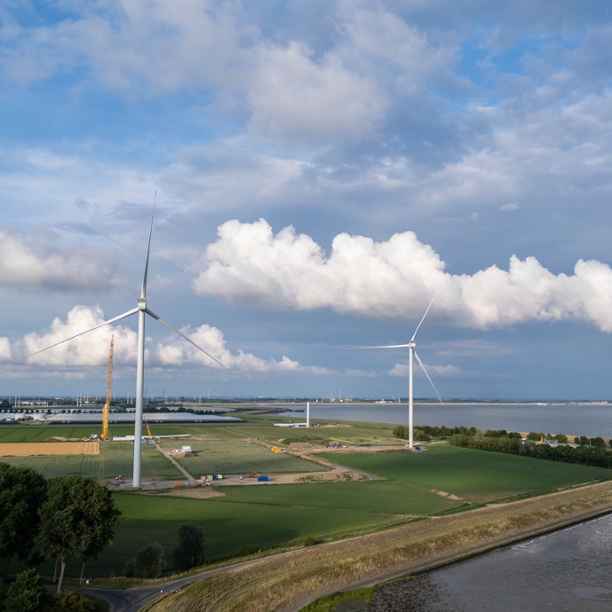
Investing in the next generation wind turbines
Together with Zeeuwind and the other shareholders, Triodos Investment Management therefore sought the most sustainable and circular solution for the blades.
Looking beyond demolition and disposal
Alex Brouwer managed the process on behalf of Zeeuwind and Lighthouse Projects, which oversaw the wind farm’s dismantling. “Reusing wind turbines abroad is often an option,” he explains. “But demand for relocating this generation of turbines was limited. That left us with a crucial question: how could we prevent the released materials, especially the blades, from being landfilled, incinerated or processed in another low-value way?”
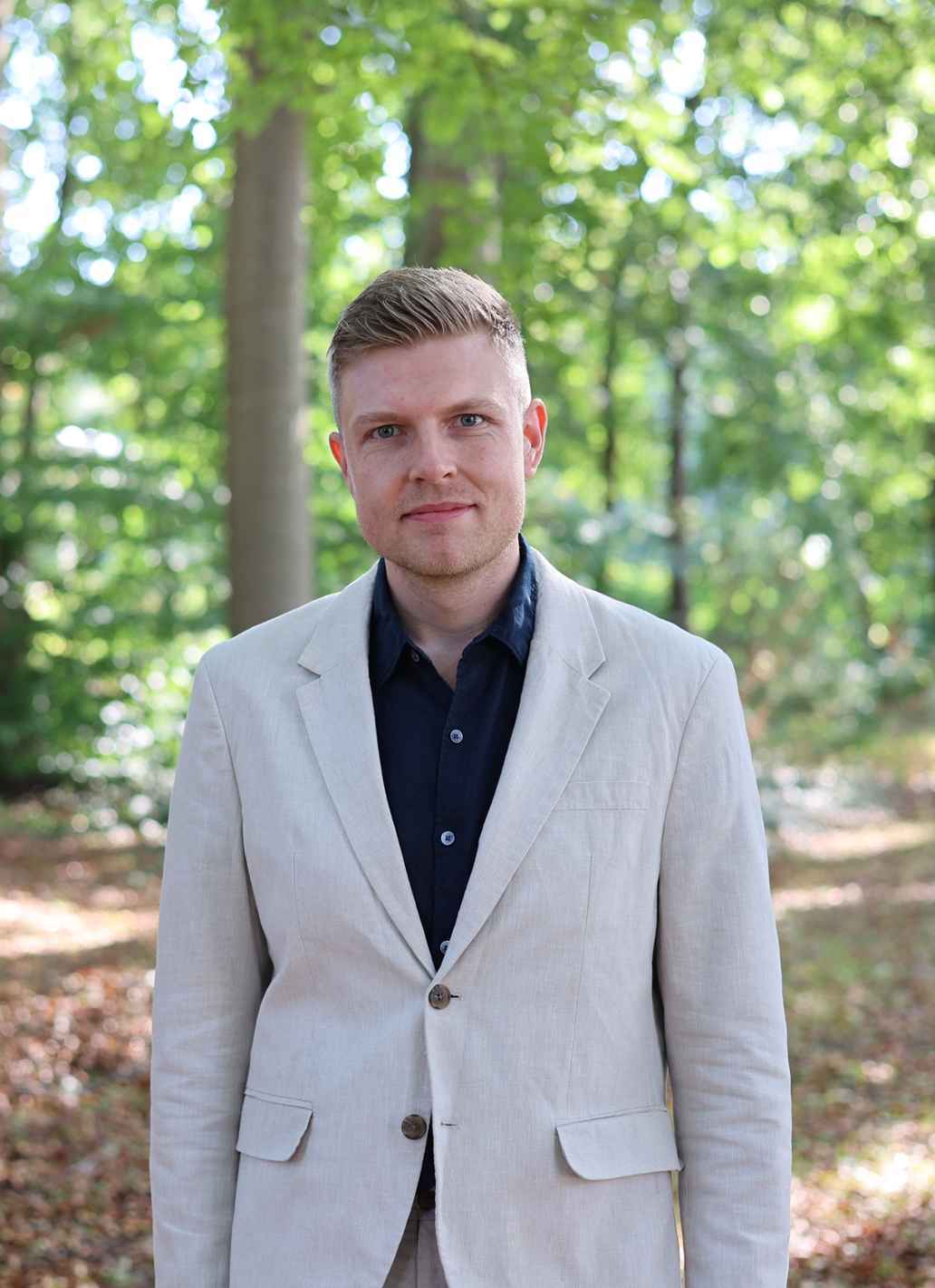
Jeremy Ruis emphasises the need for a proactive approach: “We did not want the blades to disappear into a process we could not monitor. The question was not simply who could dismantle the turbines, but who could return the materials to the value chain at the highest possible value.”
This ambition was built into the tender. Alongside safe and efficient dismantling, bidders had to propose a high-value, environmentally responsible destination for the materials. “We wanted a solution that went beyond today’s standards and took sustainability a step further”, says Jeremy Ruis.
The contract went to Sagro, a Dutch civil engineering and infrastructure company, both for its experience in demolition and dismantling and for its willingness to look beyond disposal. Alex Brouwer: “Together with Sagro, we explored the options and developed a solution we believe is both practical and forward-thinking.”
From wind turbine blades to circular building materials
The solution came from Netherlands-based start-up KoiosTitan, which has patented a process for transforming thermosets – such as the composites used in wind turbine blades – into new construction materials.
Wind turbine blades consist mainly of glass fibres and synthetic resin. During production, layers of fibre mat are embedded in resin inside a mould. Once cured, the result is a strong, lightweight material that lasts for decades. Those same qualities, however, make it difficult to recycle at the end of its lifecycle.
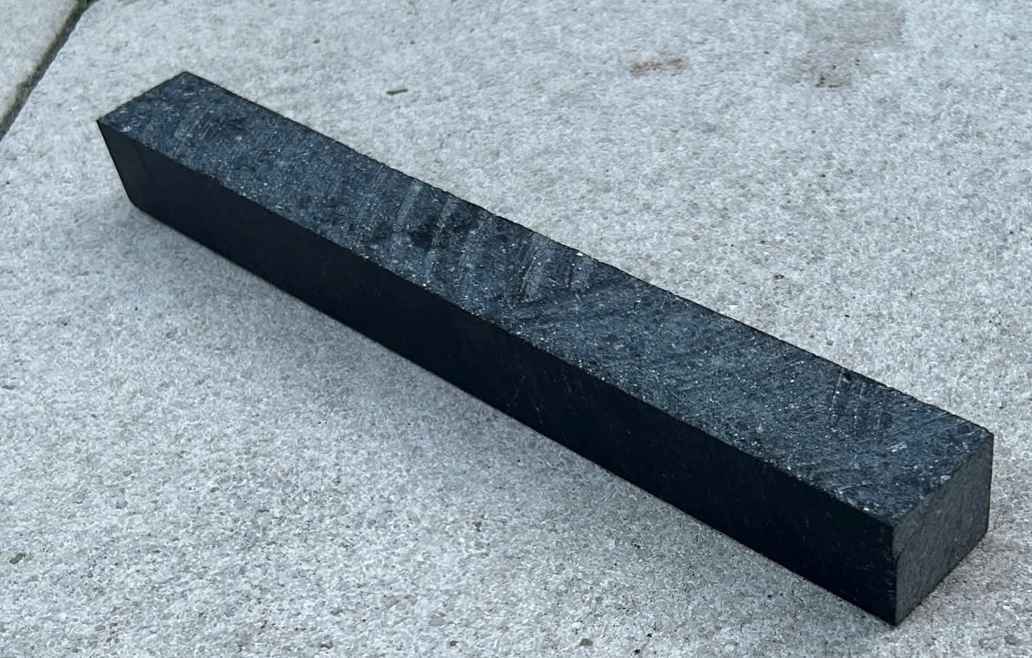
The process starts at Sagro, where the blades are cut into smaller pieces and transported to Maastricht. KoiosTitan then processes the material into fractions of different sizes. Johannes Engels of KoiosTitan explains: “We combine the material with a binding agent to create new products for construction, civil engineering and hydraulic engineering, including beams and planks. The material retains its strength and can be reused. Because it remains a thermoset, we can take it back at the end of its lifecycle and process it again. In theory, this cycle can be repeated indefinitely.”
An alternative to tropical hardwood
The old blades from the Willem-Annapolder wind farm are now being turned into beams for Sagro. The company uses the recycled material for crane mats and support structures at worksites in the same region where the blades were dismantled.
Tropical hardwood beams are often used for these purposes. “That makes this solution particularly valuable,” says Janine Commee of Sagro. “It gives a difficult-to-recycle material a new life while avoiding the use of scarce raw materials.”
For Alex Brouwer, this was a key consideration. “Rather than just a solution for the blades, we wanted an application that genuinely adds value. That is when circularity becomes tangible.”
Taking responsibility
According to Jeremy Ruis, the project also shows how much work remains. “The market for high-value processing of turbine blades is still underdeveloped. Incineration is currently the main route. That is why we felt it was important to choose this solution and help the market develop. Dismantling projects should not only be assessed on (the lowest) price, but also on the societal impact.”
“This project shows that circularity can work in practice and be both sustainable and scalable,” says Jeremy Ruis. “If more organisations choose solutions like this, high-value processing can become the standard rather than the exception. We hope this project encourages others to take the same step.”