
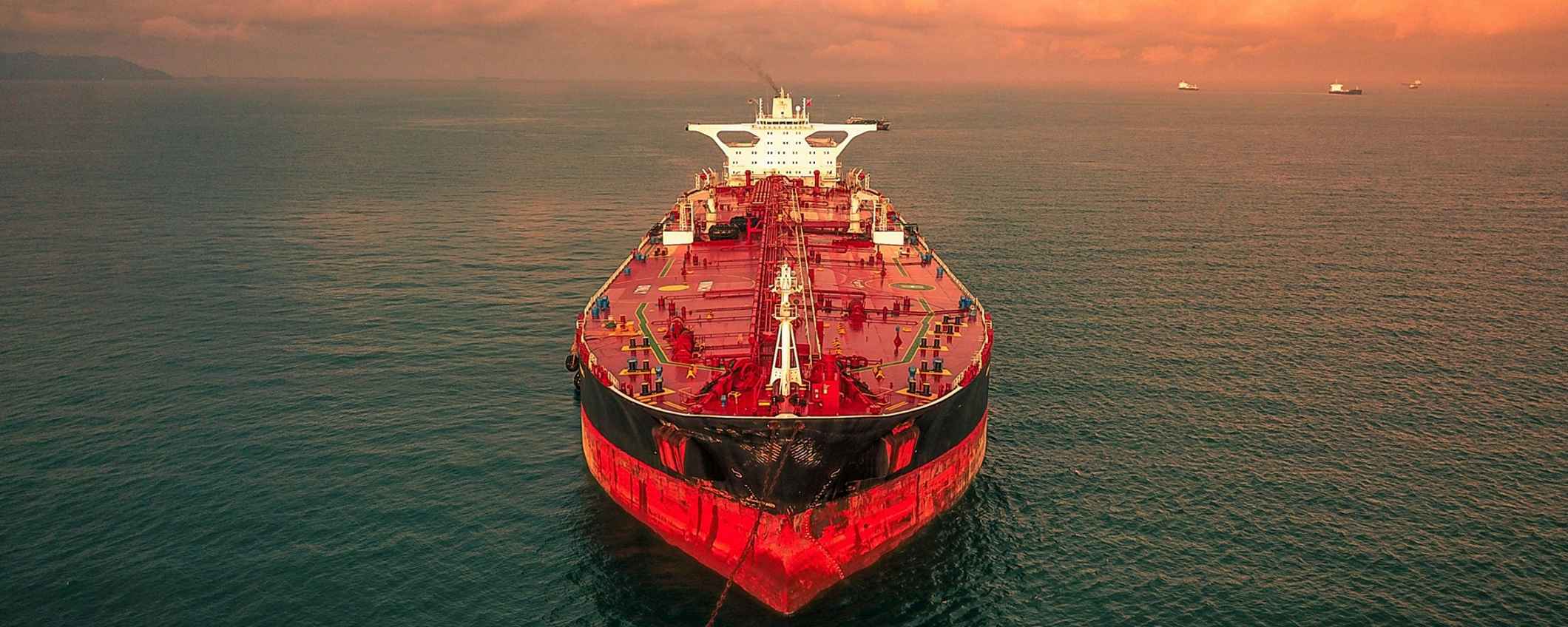
Europe is structurally addicted to imported fossil energy and every price crisis reveals the cost of that dependency more starkly than the last. The EU spent EUR 396 billion on fossil fuel imports in 2025, equivalent to roughly EUR 1,100 for every European citizen. An energy price shock is not a natural disaster with random victims. It is a transfer mechanism: income flows from importing economies to exporting ones, from households and businesses to fossil fuel producers. Europe, as a net energy importer, is structurally on the losing side of that transfer. Every price spike means the continent collectively pays more for the same energy. That income does not return.
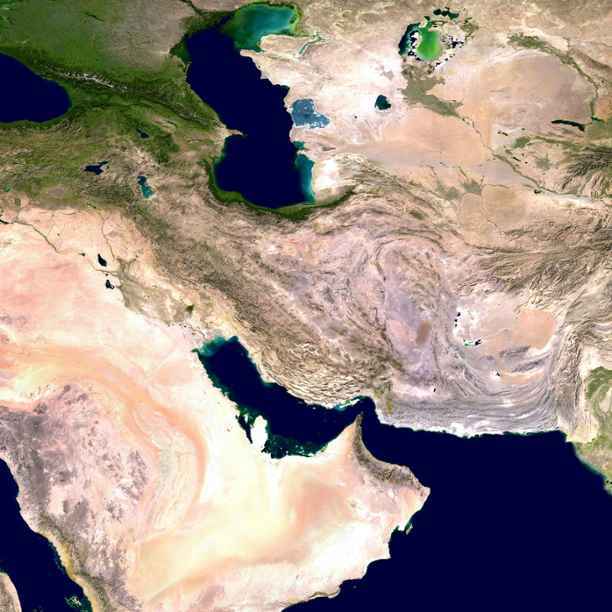
Financial market implications of the war against Iran
On the other side of the equation: fossil fuel companies are reporting record margins. Shell, BP and ExxonMobil are not going through a crisis, but are experiencing a windfall. Their profit, in a very direct sense, is the mirror of Europe's dependence.
The wrong reflex
Reducing fuel taxes in response to a price shock is intuitively appealing but economically counter-productive. It lowers the price of the very thing that caused the problem. It distributes support indiscriminately, benefiting wealthy households alongside those who genuinely cannot absorb the shock. And it removes the one signal that could drive structural change: the price incentive to reduce consumption and accelerate substitution.
As FT economist Martin Sandbu has noted, policymakers in 2022 were right to say that support should be "timely, targeted and temporary", and then largely failed to follow through. According to Bruegel, only around 27% of the massive European energy support packages in 2022-23 consisted of targeted measures; nearly three quarters went to broad-based price controls and tax cuts that benefited everyone regardless of need. There is no excuse for repeating that mistake. Experience from previous crises clearly shows that well-targeted support mechanisms are more effective and fiscally better sustainable than broad-based subsidies, a point the IEA made explicitly in its response to the current disruption.
The correct response requires three distinct but complementary tracks.
1. Reduce consumption of energy
Demand reduction is the fastest lever available and the most consistently underestimated in political debate. The IEA, not an organisation known for radical positions, has just identified ten concrete demand-side measures that governments, businesses and households can implement immediately: remote working where possible, reducing highway speed limits, shifting to public transport, cutting non-essential air travel. Road transport accounts for around 45% of global oil demand. The agency is explicit that supply-side measures alone cannot fully offset the scale of the disruption; demand must be part of the answer.
During the pandemic, petrol and diesel consumption across the EU fell by around 20% compared to pre-pandemic levels, driven primarily by the collapse in commuter traffic. The IEA estimates that if all workers who can work remotely did so just one day per week, the reduction in transport energy demand would be substantial and immediate, no new technology required.
A more critical approach to energy-intensive digital infrastructure is also warranted. EU data centres consumed an estimated 70 TWh of electricity in 2024, around 3% of total EU electricity demand, and the IEA projects this will reach 115 TWh by 2030, driven primarily by AI. That is roughly equivalent to the annual electricity consumption of the Netherlands. Sufficiency, consuming less by design rather than by hardship, is rational economic policy for a continent that imports the majority of its energy.
2. Accelerate the transition, not retreat from it
The structural answer to fossil fuel dependence is homegrown renewable energy. In 2025, wind and solar generated more electricity in the EU than fossil fuels for the first time. A genuine milestone that reduces, with every additional gigawatt installed, Europe's exposure to exactly the kind of external shock it faces now. The European Commission has recognised this with a Clean Energy Investment Strategy targeting over EUR 75 billion in financing over three years.
But the transition cannot solve a crisis happening right now. Grid expansion, permitting and construction take time. And this is precisely where the current political moment becomes dangerous. Rather than using this crisis as an argument for accelerating the transition, several EU governments are using it as cover to dismantle the policy architecture that makes the transition possible. After a year marked by the rollback of sustainability reporting obligations, the postponement of carbon pricing in transport and buildings and the launch of ten deregulation packages, the current energy shock has prompted calls to suspend or fundamentally weaken the EU Emissions Trading System. Italy has called for its outright suspension. This would be a serious mistake.
Weakening the ETS would destroy investment certainty for industries that have already committed to decarbonisation, while delivering no relief from fossil fuel price volatility, which is caused by dependence on fossil fuels, not by carbon pricing. As Sandbu observes, tighter monetary policy in response to the inflationary effect of the oil shock carries the risk of further compounding the damage by slowing the very transition investments that would reduce Europe's future exposure. Rolling back the ETS in response to an energy crisis is the policy equivalent of treating a dependency by making the substance cheaper.
3. Tax the windfall, protect the vulnerable
The third track is politically contentious but analytically the most straightforward. When a crisis generates large windfall profits for fossil fuel producers at the direct expense of households and importing economies, fiscal policy has a clear role in redistributing those gains. Windfall taxes are a no-brainer.
The precedent exists and it works. The UK introduced a windfall profits levy on oil and gas producers in 2022. Shell paid more than fifty times as much British tax in 2023 as the year before. The measure runs until 2030. Climate organisations are calling for a permanent European version: structurally taxing excess fossil fuel profits, with revenues earmarked for the energy transition and targeted household support.
The revenues from such a mechanism should not be recycled into blanket fuel subsidies. They should be directed to those who genuinely cannot absorb the shock, through income transfers and targeted support, ideally structured, as the German "price brake" design, so that support covers a fixed quantity of baseline consumption while preserving marginal price incentives to use less. Universal fuel tax cuts are regressive: they benefit higher-income households disproportionately, since wealthier households consume more energy. Targeted income support is both more equitable and more economically efficient.
The political trap
The deeper risk in the current moment is not getting this response wrong, but using the crisis as an excuse to undo the very policies that would prevent the next one. If the EU's emissions trading system is substantially watered down without strengthening other instruments, the entire structure of clean investment risks collapsing. The companies that invested in decarbonisation in good faith would be penalised; those that resisted change would be rewarded.
Europe's structural problem is the dependency on imported fossil fuels that makes it vulnerable to exactly the kind of external shock it is experiencing now. This dependency makes Europe currently poorer as net importer and is also used as a way to blackmail Europe, as the US again threatens to do. The solution is less consumption, more domestic renewable production, windfall taxes on those who profit from crisis and targeted protection for those who cannot absorb the cost.
Kicking the habit takes effort and political courage. Staying addicted has a price. And Europe pays it, reliably, every time a tanker reroutes.